Encounter
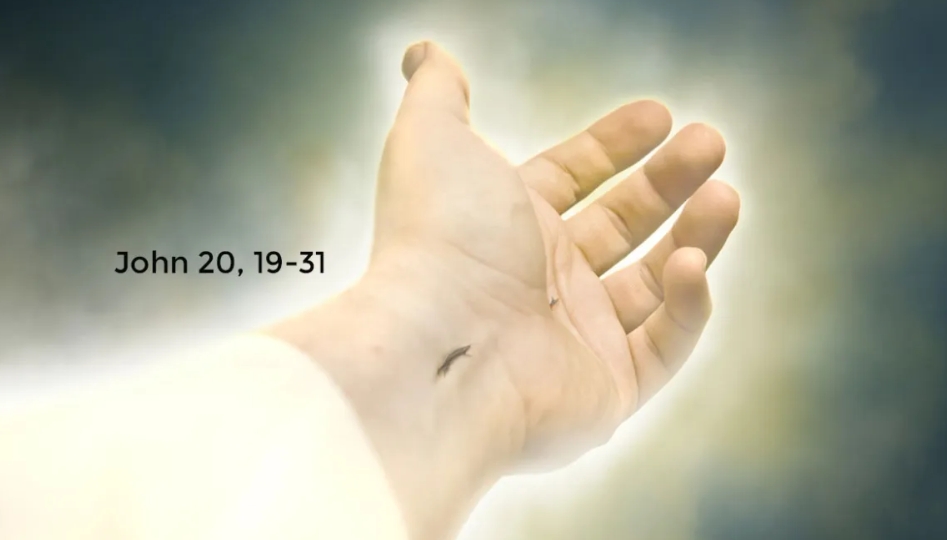
When we read of Thomas, confronted with accounts of the other disciples of the Risen Christ (John 20:19-31), his response is understandable, responsible, even ethical. A little under-informed, maybe, given what he had heard from Christ about His pending death and resurrection, but it would be unfair to hold that against him, given everything else involved.
Belief was at the centre of Jesus’s discussion with Thomas. He says to Thomas, ‘stop doubting and believe.’
As a young Christian, I struggled a little with unbelief. I was moving amongst very confident, it seemed unquestioning, friends and peers at my Uniting Church in Mt Waverly and in Youth for Christ, Billy Grahan style evangelical rallies. My struggles with unbelief were private. Then I came across a book called Doubt by an author called Oz Guiness, where he argued that unbelief was an inevitable part of the landscape of belief: that it was not only inevitable but healthy to be aware of areas of our questioning – that reflecting on both belief and unbelief was part of discipleship.
I have heard it argued that real, active Christianity is more about faith than a focus on belief; that belief is an intellectual positioning, but that faith is about relationship, something lived-out, deeper than finer points of theology.
And that’s what strikes me about the readings today, they are about encounter. Very real encounters with the Christ. We have all had those encounters in some way: if not we would not be sitting here.
In a little while we will sing a contemporary hymn (Together in Song 691) by the Australian Anglican priest and hymnist, Elizabeth Joyce Smith. The first verse is:
Faith will not grow from words alone,
from proofs provided, scripture known;
our faith must feel its way about,
and live with question-marks and doubt.
If we are unsure about that last line, there are plenty of examples in history, and some parts of the current American political landscape, where some ‘question marks and doubt’ could have slowed down injustices and persecutions couched in justifications by faith.
We have different kinds of encounters with Christ and God as we go through our lives. The meanings we make of those encounters may change over time. In our microcosm of our cultural world, we rarely feel safe enough to articulate, put words to those encounters, talk of them to others. Maybe it would be a good thing to practise some time – discussions over morning tea or informally over a coffee.
It is good, sometimes I think, to be pushed on matters of what we believe. The readings today are quite clear about what Jesus and the disciples had to say about essential beliefs of those who seek to follow Christ.
Thomas exclaimed said to ‘My Lord and my God’, it was not a statement about putting his hands in the holes of the side of Jesus. It was, first and last, the result of his knowing through his encounter with the Christ. Beyond particular beliefs or theologies. Beyond faith. A moment of understanding. Of knowing. And speaking to that knowing. I think we can all, at some level, relate to that knowing.
Grace
When Jesus appeared to the disciples, cowering behind closed doors, he did not berate them for not listening and believing in his teaching and testimonies to them before the Cross – or for the absolute hurt and loneliness of being left, deserted, on his own, on the cross to die. After all the days since his triumphant entry into Jerusalem, his public acts of cleansing of corruption at the temple, public healings, professions of undying faith by those close to him …. his first recorded words were ‘Peace be with you.’
Before Jesus was taken into custody, Peter was effusive in his statements of belief and discipleship. Then, like many of us have in different ways, when a crunch time of testing came, his faith was found wanting. He denied his knowledge of, his relationship with, Jesus.
Yet after rising, Jesus looked beyond those things – did not bring them up, because there was no point to that. He asked Peter whether, after all those failures, Peter loved him.
Response
When Jesus did appear, it was a time of great darkness. A few days before, the sky had literally turned black. The followers of Christ were in great despair. Hope was nowhere to be seen.
In different ways, that is where we can feel like the world is now, is heading now. Like the times of the Dry Bones (Eziekiel 37) which we were thinking of a few weeks ago.
In some ways, the darkness we can feel now is a reflection of the ways that in the past we have been privileged and protected from living alongside darkness, compared to other parts of the world: other populations who Jesus loves equally. Wars, poverties, persecutions and cruelties that we all, to varying extents, have been protected from. But we are hidden from these things no longer. Jesus comes into this space, unannounced, with His truth based on grace and love.
As the we will sing in a moment:
The pattern Jesus showed, we share:
life comes through death, hope through despair.
God is made known in brokenness
We are reminded that God will continue to be present in the world, in acts of love and care – in all the forms that those take. The light of love, and God is Love, was not put out. It was not defeated.
We are given these accounts, because, alongside the central role of Grace and Love, of and by, God, they ask something of us. The Son of God is asking something of us. We are not given the privilege of despair.
The disciples were sent into the world. Peter was sent into the world.
We are called to be faithful to the love and call of God, in all its forms. It is that call that has us spending precious times with our communities in our buildings here are Elsternwick, our support of the Playgroup, support for the child care and programs of the Community House in Kooyong Rd, has us in our vigils for peace on the street every week.
We are being faithful in not seeking to do those things as individuals. As with the first generations of The Way, we are called to meet together, as we do, learning, eating, drinking cups of tea and pizzas on Friday and Sunday nights.
We have our encounters with God in all these things. We encounter the presence of Christ, God, grace and life in all these things. We are called and respond, together. As the hymn will have us sing:
Faith takes the little that we know,
and calls for hope, and tells us: Go!
Love and take courage, come what may;
Christ will be with us on the way
Greg Smith